

In the financial industry, data security is one of the core elements of business survival and growth. With the acceleration of digital transformation, institutions such as banks, insurance companies, securities firms, and fintech enterprises face increasingly severe risks of data leakage. Sensitive customer information (e.g., personal identification data, bank account details, transaction records), core business data, and internal confidential documents—if compromised—can result in significant financial losses and privacy violations for customers, severely damage the enterprise's reputation, cause customer attrition, and even lead to legal actions and hefty fines. Therefore, establishing an efficient and reliable Data Loss Prevention (DLP) system has become an urgent necessity for the financial sector.
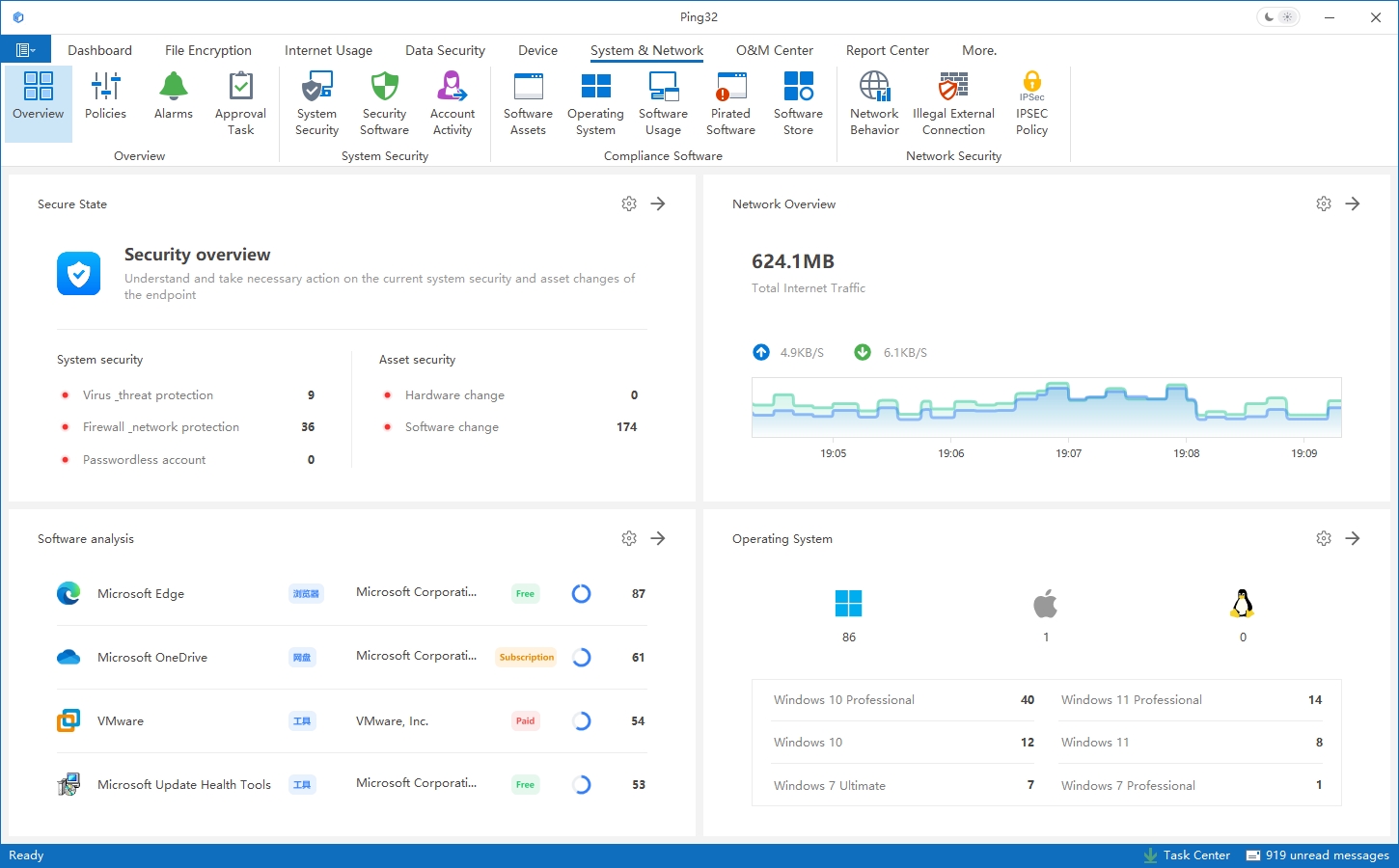 Ping32 Data Loss Prevention System is a professional data security product designed to help financial institutions meet regulatory compliance requirements and enhance their overall information protection capabilities in response to growing data security challenges.
1. Risk Analysis of Data Leakage in the Financial Industry
- Insider Misconduct: Internal staff may—whether due to negligence, malicious intent, or external incentives—illegally extract sensitive data via email, instant messaging, mobile storage devices, and other channels, leading to data leaks.
- External Cyberattacks: Hackers exploit network vulnerabilities or use malware to breach the information systems of financial institutions and steal sensitive data. For instance, phishing emails may trick employees into clicking malicious links that install trojans to extract data.
- Third-party Risk: During business collaborations with external partners, vulnerabilities in data sharing may lead to unauthorized use or leakage of data by third-party personnel.
- Mobile Workforce Security: With the rise of remote and mobile work, employees increasingly handle business data on personal or company-issued mobile devices. These devices are prone to loss or theft and are often used in less secure network environments, increasing the risk of data leakage during transmission and storage.
2. Ping32 Architecture for Data Loss Prevention in the Financial Sector
Ping32 offers a multi-layered, comprehensive data security framework, forming a complete protection lifecycle from data discovery and monitoring to prevention and auditing.- Data Discovery and Classification
- Data Monitoring and Auditing
- Data Protection Measures
- Encryption and Access Control
3. Key Advantages of the Ping32 Solution
- Comprehensive Protection: Covers all aspects of financial data security—from discovery and monitoring to protection and auditing—forming a multi-layered defense system capable of mitigating a wide range of data leakage threats.
- Intelligent Recognition: Employs advanced data recognition technologies to accurately identify both structured (e.g., database records) and unstructured data (e.g., documents, images, audio). It also features intelligent learning capabilities to automatically refine recognition rules based on business characteristics and data trends.
- Flexible Policy Management: Enables enterprises to configure customized data protection policies based on their security needs and business workflows. Protection rules can consider data classification, user roles, time, and location, allowing for granular and precise data security management.
- Easy Deployment and Administration: Provides a user-friendly management interface for seamless deployment, configuration, and ongoing system management. Supports distributed deployments to accommodate complex network architectures and large-scale device management in financial enterprises.
- Regulatory Compliance Support: Helps financial institutions comply with national and industry data security regulations and standards such as GDPR, CCPA, and industry-specific regulatory mandates. Comprehensive audit logs and protection measures support enterprises in maintaining compliant operations.


